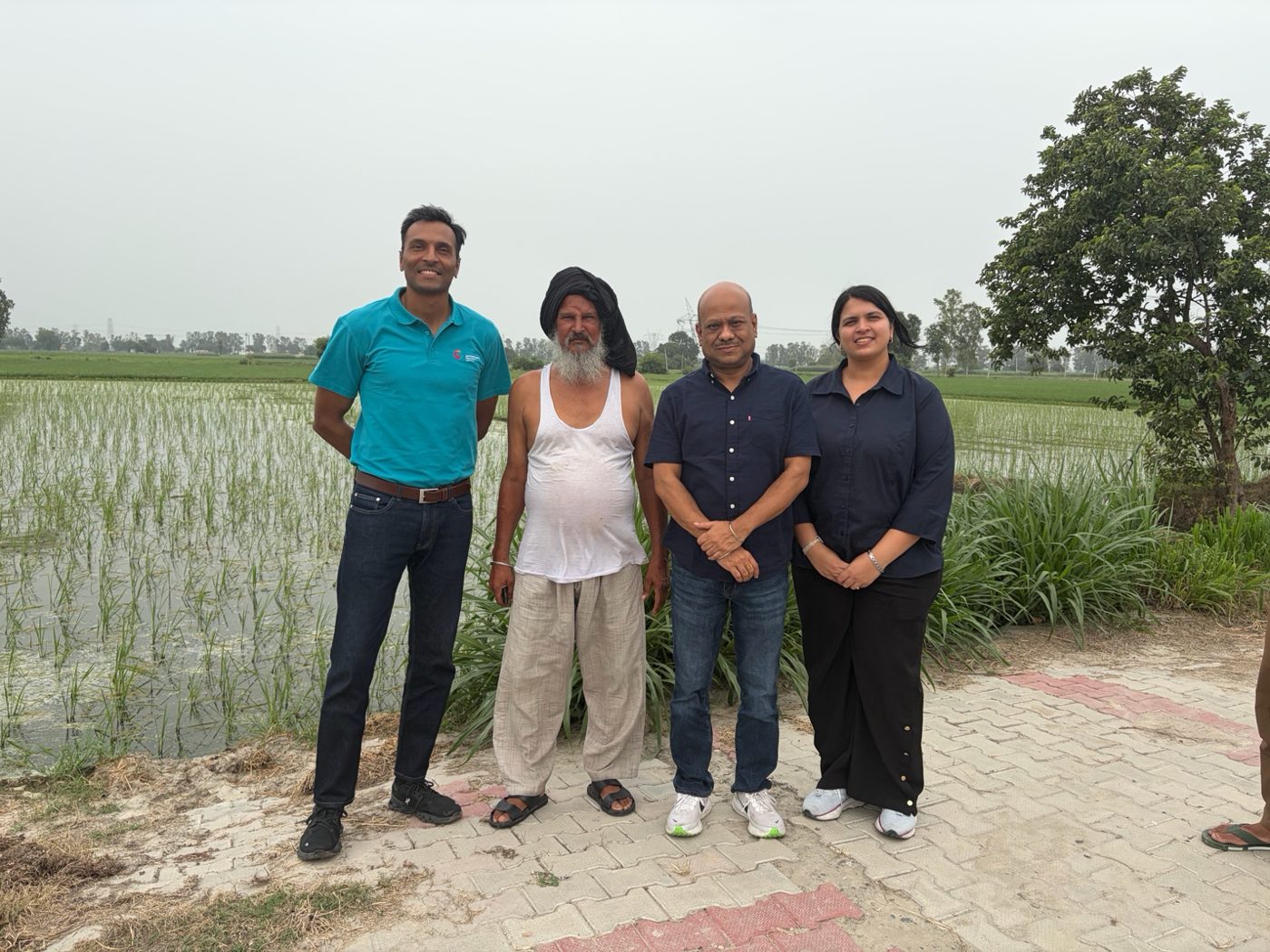
As part of our due diligence on a financial institution, we met several of its customers running micro-enterprises. While financial statements, portfolio metrics and underwriting standards tell us how an institution performs, conversations with borrowers tell us why it matters.
One conversation, in particular, has stayed with me. For 45 minutes, I forgot about the 35-degree heat and 80% humidity as I listened to one borrower share his life with us.
We arrived at his home just as he was taking a short break from his morning's work in the fields. He is 70 years old. Behind his house stretched a small paddy field, while his three dairy cattle waited nearby to be fed before the next round of work began. It was an ordinary day in rural northwest India.
Despite having just finished hours of physical labor, he welcomed us with genuine warmth. He insisted we sit down and share tea with him (a cup of milk for the youngest member of our team). In this part of India, offering milk to younger guests is a sign of care and hospitality. It was a simple act, but one that reflected a generosity of spirit that far exceeded his means.
As we spoke, he shared his life with us with remarkable openness. Although we had only just met, he spoke candidly about the challenges that have shaped his family.
In 2015, he lost his 17-year-old son. A few years later, he lost his wife to cancer. Today, he continues to care for his family and raise his grandchildren while managing a small dairy farm with three cattle and cultivating a modest parcel of land.
His face reflected years of hard work in the fields, but as he shared his story, it also became clear how much personal loss and uncertainty he has carried.
His livelihood is a constant balancing act.
Every year brings new risks. Cattle fall ill. Heat waves and erratic weather affect both livestock and crops. Each year some of his cattle die, forcing him to borrow simply to rebuild his herd. Feed prices continue to rise. Veterinary care is expensive. Milk prices fluctuate, often leaving little profit after months of work.
The small piece of land he cultivates offers another source of income, but little certainty. After months of effort, with rising labor cost, the prices he receives in the government market often barely cover his cost of production, while inefficient procurement processes further erode already thin margins.
Even daily life is challenging. Electricity supply is unreliable, making the region's intense summers particularly difficult for his grandchildren, who endure long hours without power while coping with the heat and mosquitoes.
Listening to him reinforced something that is easy to overlook when reviewing investment papers.
Financial vulnerability is rarely caused by one event. It is the cumulative effect of personal tragedy, climate risk, volatile markets, inadequate infrastructure, health shocks and limited financial resilience. These risks compound one another, leaving families with little margin for error.
This is where responsible financial institutions play an important role.
For him, this financial institution is not simply a lender. It is a trusted partner. When he needs to purchase cattle, employ farm labor, buy feed, pay for medicines or recover from an unexpected setback, he knows he can access finance from an institution that understands his circumstances and offers products tailored to his needs. The AUD 5000 loan itself does not eliminate risk, but it gives him the ability to recover, adapt, rebuild and continue.
As investors, we spend significant time evaluating liquidity, portfolio quality, capitalization and operational efficiency. Those disciplines remain essential. But field visits remind us that every loan in a portfolio represents a family working to build a more secure future despite extraordinary uncertainty.
“Before this visit, he was one customer among thousands in the company's portfolio. By the time we left, he was no longer a data point.”
Before this visit, he was one customer among thousands in the company's portfolio. By the time we left, he was no longer a data point. He was a resilient entrepreneur rebuilding his life after profound loss, navigating the realities of climate risk and fragile rural livelihoods, while continuing to work every day to create opportunities for the next generation.
His story is a reminder of why our investment decisions matter.
Ultimately, financial inclusion is not measured by the number of loans we help finance or the growth of a portfolio. It is measured by whether families like his are better able to withstand life's inevitable shocks, seize opportunities and create a more secure future. If our investments help make that possible, then we are investing in far more than innovative financial products – we are investing in resilience, dignity and hope.